
Building capability for Bhutan’s public service.
The Royal Institute of Management develops leaders, strengthens institutions and advances practical knowledge through education, professional learning, research and consultancy.
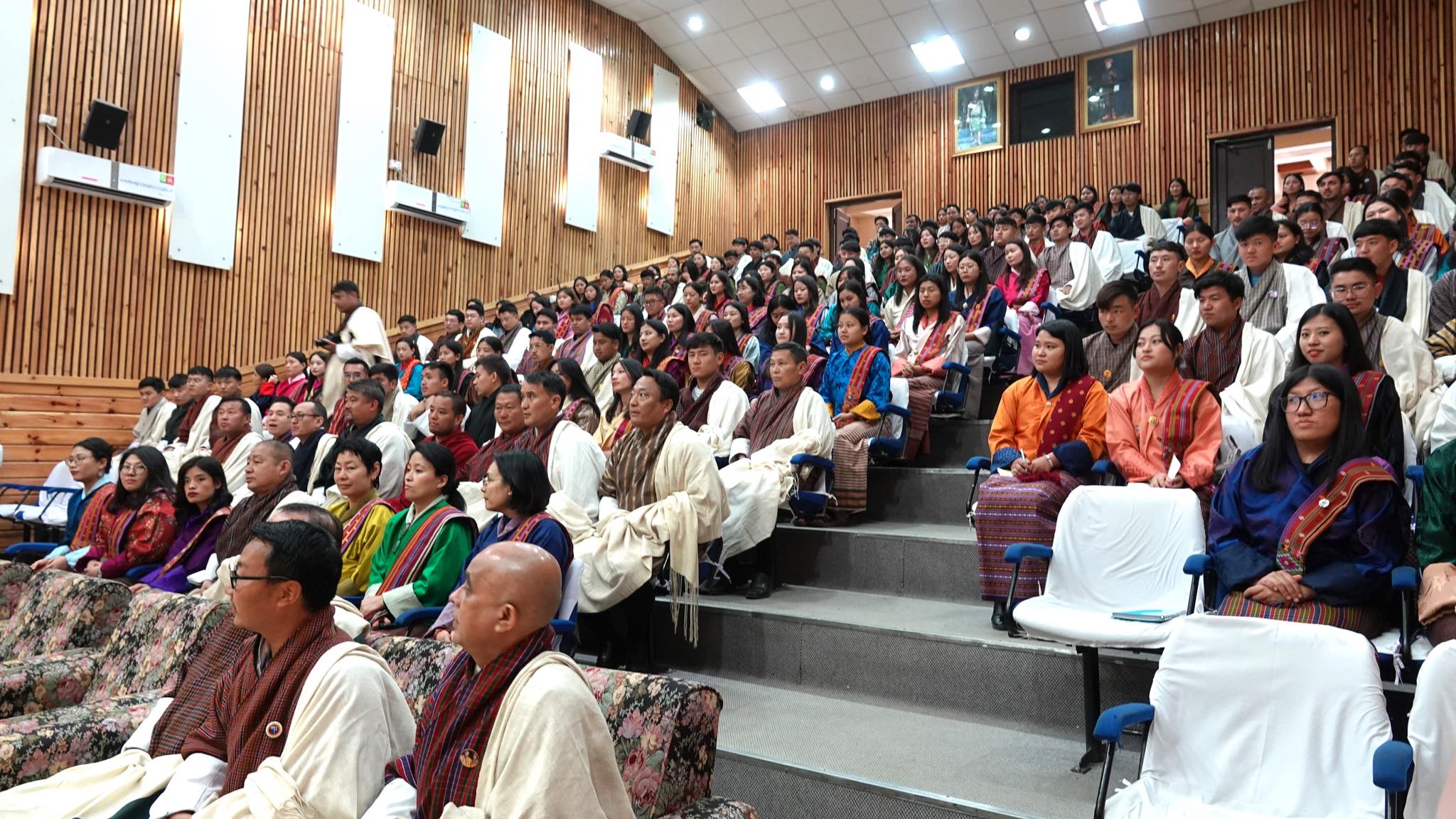
A national institute with a public purpose
RIM traces its origins to 1986 and was established as an autonomous institute under Royal Charter on 8 May 1990. As Bhutan’s apex training institution, it supports the development of capable public sector leaders and professionals.
The Institute brings together academic programmes, leadership development, research and institutional support. Its work connects learning to the practical needs of government, organizations and communities.
Explore RIM’s centres →To be the leading regional centre of excellence in public sector governance and business, dedicated to developing human capability and fostering transformative leadership.
To empower public sector leaders through high-quality education, practical training, innovative research and expert consulting services, driving ethical governance and sustainable progress.
Education, knowledge and service
The Royal Charter gives RIM the authority and responsibility to develop people and contribute to Bhutan’s public life.
Develop professional capability
Set programme terms, deliver learning and confer diplomas and certificates. Build academic links with institutions at home and abroad.
Advance useful knowledge
Conduct and publish scholarly work, support national research and use relevant government data for research purposes.
Train and advise
Provide pre-service and in-service development, specialist training in public administration, accounting and auditing, and consultancy for public and private organizations.
Steward resources
Manage fees and institutional resources, invest and grow endowments, and hold and manage property in support of RIM’s mandate.
Learn by designing, testing and doing
The Annual Review describes RIM’s institutional DNA through three connected pillars.
Signature pedagogy
Learning by Design moves through envisioning and empathizing, exploring and experimenting, then applying through experience.
The case method
Contextual scholarship connects concepts to real decisions, with Bhutan-rooted cases and practical problem solving.
Research and innovation
Research, advisory work and publication strengthen policy and practice. The Bhutan Journal of Management (BJoM) is RIM’s peer-reviewed research platform.
How RIM is organized
The structure below follows the governance and operating model described in the 2025–2026 Annual Review.
Programme Leaders lead programmes within centres, from core courses to consultancy.
Board of Directors
The Board provides institutional governance. RIM’s published Board document (March 2025) lists the members below. Confirm current appointments and titles before publication.
- Dasho Tashi Pem — Chairperson, Royal Civil Service Commission (Chairperson)
- Dasho Tashi Wangmo — Secretary, Ministry of Industry, Commerce and Employment
- Dasho Chewang Rinzin — Director, Royal Institute of Governance and Strategic Studies
- Mr Norbu Dendup — Director, Department of Treasury and Accounts, Ministry of Finance
- Mr Karma Pema Loday — Registrar, Royal Institute of Management
- Ms Tshering Yangden — Director, Royal Institute of Management (Member Secretary)
Quality assurance
Quality Assurance supports regulatory compliance and accreditation, audits curricula and faculty performance, gathers stakeholder feedback and stewards policy.
Four centres, one shared purpose
RIM’s centres bring education, leadership development, research and institutional support together.
Academic Programmes
Accredited, results-oriented programmes aligned with national priorities and professional standards.
View centre →02 · LeadershipLeadership Development
Leadership learning and professional development that support Bhutan’s transformation priorities.
View centre →03 · KnowledgeResearch & Innovation
Research, policy contribution, Bhutan-rooted cases and innovation.
View centre →04 · SupportProgrammes Support Services
Admissions, examinations, library and ICT, student services and institutional operations.
View centre →Source: RIM Annual Review 2025–2026, institutional profile and governance sections.